Evidence, factors, and discipline for lasting prosperity
A working manual for Indian investors. Low-cost index funds, factor tilts, and the discipline that turns evidence into lasting wealth.
Former IRS Officer • Independent Investor
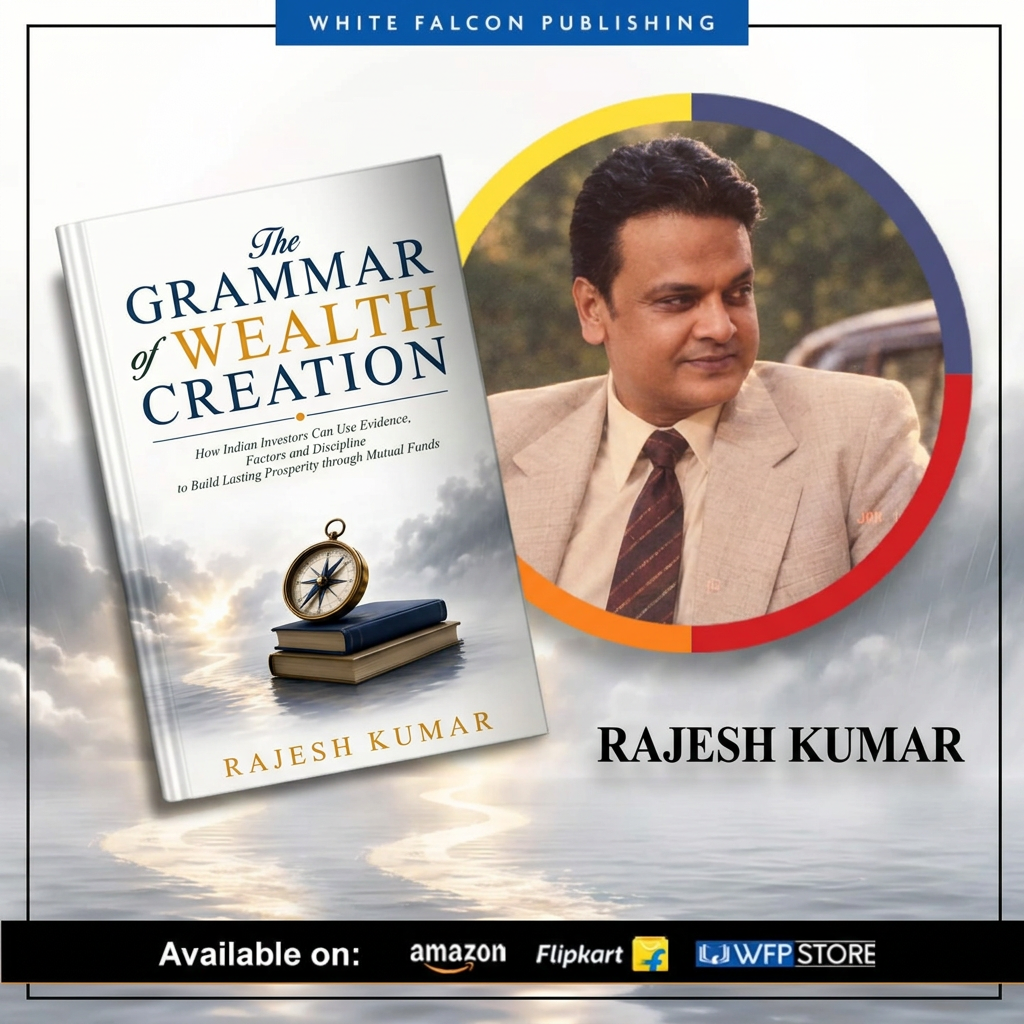
Rajesh Kumar is a former IRS officer and an advocate in the tax domain, not a finance professional. That distance is deliberate. He has no product to sell and no theory to defend, only the view of someone who has spent years reading the markets for himself.
He has invested in Indian equity markets since 1999. Two decades of independent reading and research inform every page, written from the standpoint of the individual investor — the person usually on the client side of a market shaped by professionals, institutions, and their incentives.
He is a published researcher. His paper “The Geometry of Wealth” used Monte Carlo simulation to show that random markets cannot reproduce Bessembinder’s documented wealth concentration. “Why Efficient Market Hypothesis Is Wrong” carries that finding from stocks to the investor’s own returns. He believes investing is a skill that can be learned, and then applied.
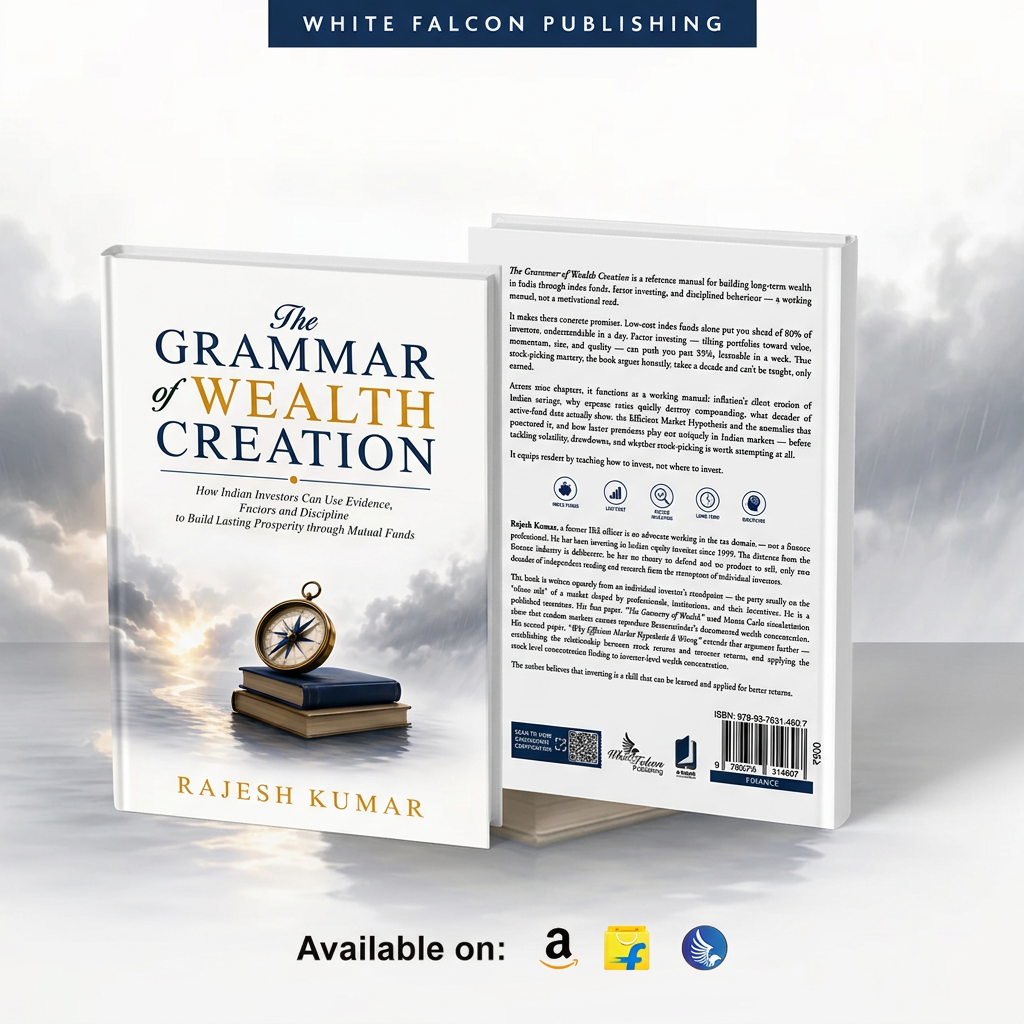
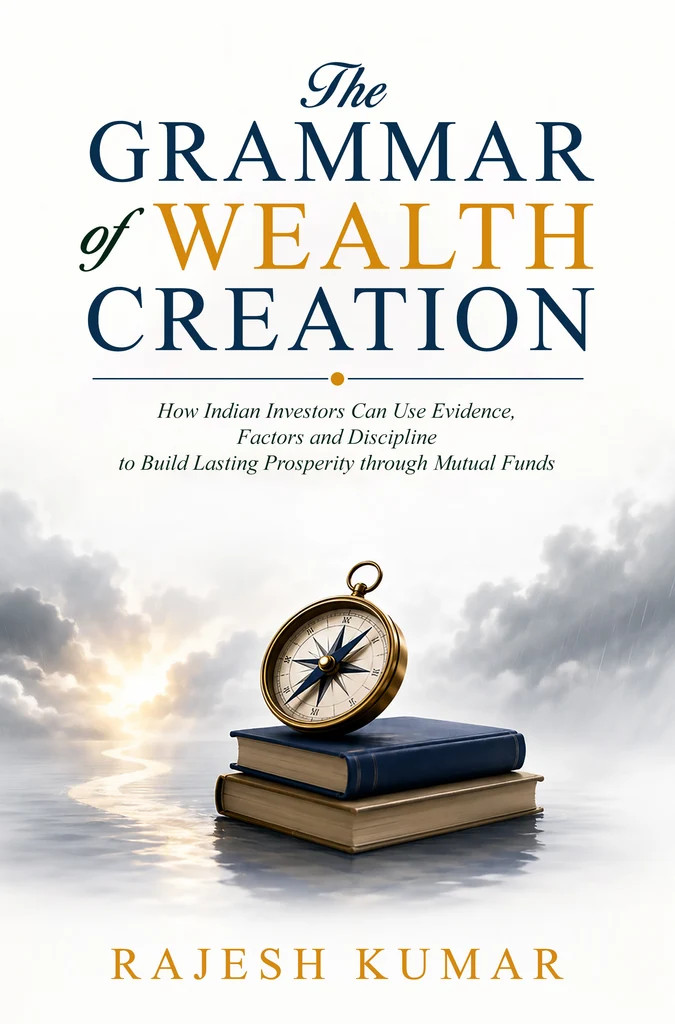
The Grammar of Wealth Creation is a reference manual for building long-term wealth in India through index funds, factor investing, and disciplined behaviour. It is a working manual, not a motivational read, and it teaches how to invest rather than where to invest.
It makes three concrete promises. Low-cost index funds alone put you ahead of 80% of investors, and the case can be understood in a day. Factor investing — tilting a portfolio toward value, momentum, size, and quality — can push you past 95%, and it can be learned in a week. True stock-picking mastery, the book argues honestly, takes a decade. It cannot be taught. It can only be earned.
Across nine chapters the manual stays practical. It takes up inflation’s silent erosion of Indian savings, the way expense ratios quietly destroy compounding, and what decades of active-fund data actually show. It explains the Efficient Market Hypothesis, the anomalies that punctured it, and how factor premiums play out in Indian markets.
The later chapters turn to volatility, drawdowns, and the question of whether stock-picking is worth attempting at all. The aim is lasting prosperity built on evidence, factors, and discipline — a grammar the individual investor can actually use.
Cost is the quiet tax on every year of compounding.
A factor earns its keep only through discipline.
The individual investor’s edge is evidence.
Watch the Trailer
Write to Rajesh Kumar about index funds, factor investing, or the discipline behind lasting wealth.